Collaborative Research Centre (SFB) 1313 “Interface-Driven Multi-Field Processes in Porous Media – Flow, Transport and Deformation” of the University of Stuttgart goes into the third funding period (2026 – 2029)
The Collaborative Research Centre (SFB) 1313 “Interface-Driven Multi-Field Processes in Porous Media: Flow, Transport and Deformation” of the University of Stuttgart (Germany) continues its work. The German Research Foundation (DFG) approved its third and final funding period that runs from 2026 to 2029. Since DFG Collaborative Research Centres are funded for a maximum of three four-year periods, this decision marks a major scientific achievement and confirms the SFB 1313’s sustained visibility and relevance within the international porous media research landscape.
The beginning of the third funding period was marked by the official kick-off event on February 6th, 2026. The event brought together the SFB 1313 community and its international partners to outline the scientific objectives for the final phase.
About the SFB 1313 team
The SFB 1313 team consists of around 60 international and interdisciplinary researchers across the fields of civil and environmental engineering, mathematics, mechanical engineering, computer science, aerospace engineering, and physics. Prof. Holger Steeb from the Institute for Applied Mechanics of the University of Stuttgart is the spokesperson of the Collaborative Research Centre.
A detailed description of the scientific framework and research programme of SFB 1313 during the previous two funding periods is available in the InterPore Research Spotlight 2024, as well as on the SFB 1313 webpage: https://www.sfb1313.uni-stuttgart.de/.
Research focus
Through multiscale modelling, image-based characterization and physical experiments, as well as efficient numerical simulations and visualization methods, the SFB 1313 team has so far developed and established numerous innovative scientific tools for a wide range of applications. These tools are applicable to multiphase flow processes coupled to deformation phenomena in various engineering contexts, where they contribute to a better understanding of mass and heat transport in porous media and complex structures.
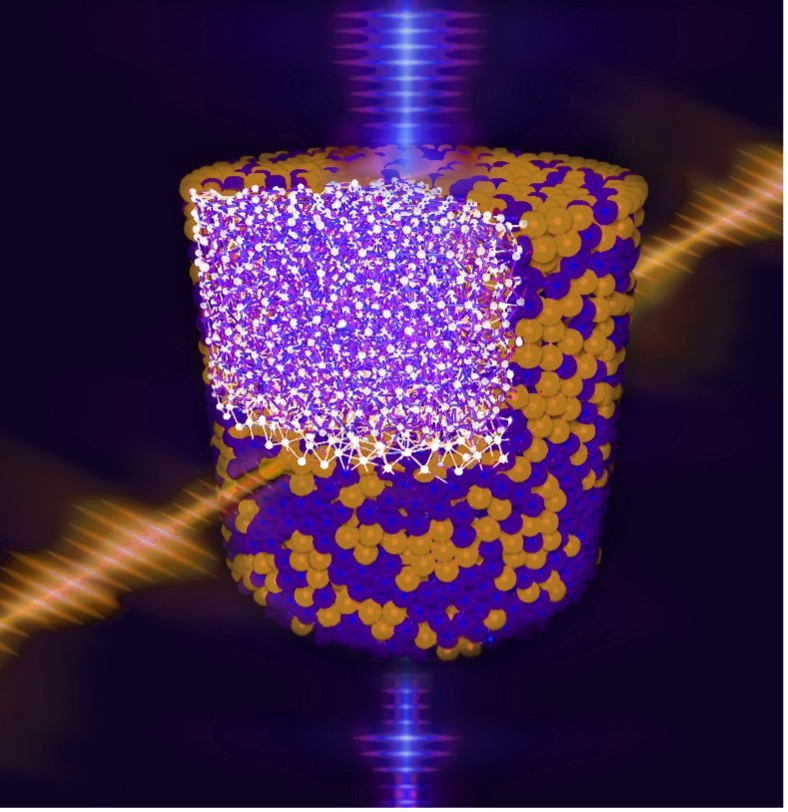
X-ray tomographic characterization of a granular packing. This porous packing of soft and rigid spheres is analyzed using ultrasound and X-ray techniques to study the effective material properties. Image: Visualization Dr. Matthias Ruf and Dr. Kianoosh Taghizadeh / Illustration Sabine Zentek
The vision for the third funding phase
During the first two funding periods, SFB 1313 created a unique research environment in which modelling, experiments, numerical simulations and visualization methods were holistically conceived and practically implemented. The close interlinking of the disciplines involved and the resulting research synergies enabled a wide range of innovative experimental investigations, for example into multiphase flow processes in porous media using microfluidics and fast, high-resolution X-ray computed tomography. The results of these investigations can be applied to issues such as deep geothermal energy and the associated fracture formation and evolution and play an important role in determining heat and fluid transport in the surrounding rock layers. The SFB 1313 embodies the ‘Stuttgart Way’: a research-intensive and interdisciplinary approach that combines internal collaboration with a strong international network of partners, thereby fostering long-term scientific collaborations.
In the third and final funding phase, the SFB 1313 team wants to focus more on studying deformation processes that interact with flow and transport phenomena, thereby translating new scientific insights directly into technical applications. For this reason, particular focus is placed on the cross-project “Vision Topic” on “salt”. Salt precipitation and dissolution can trigger or influence deformation processes in natural materials, for example through crack formation caused by evaporation-induced soil salinization. Similar mechanisms are also relevant in newly developed technical materials, such as precipitation processes that govern the strength of bio-concrete.
An outstanding example of collaborating workflows of the SFB 1313 team is the “Porous Media Lab (PML)” of the University of Stuttgart, which is a shared laboratory facility for porous media research. The PML serves as a platform for researchers interested in characterising the coupled electro-thermo-hydro-chemo-mechanical properties of different types of porous materials on various scales. Researchers from various other institutes at the University of Stuttgart as well as visiting scientists from Germany and abroad use the PML for their research work. More information: https://www.mib.uni-stuttgart.de/pml/
A new element in the communication of the scientific results of SFB 1313 is the newly established journal JoDaKISS – an open-access scientific journal that brings together contributions from the fields of data analysis, experiments and engineering modelling in a sustainable manner, making them transparent and reproducible – and thus fully complying with the FAIR guidelines of the DFG. JoDaKISS was initiated by the Stuttgart Center of Simulation Science (SC SimTech) and, especially, a group of SFB 1313 project leaders is active in its editorial board.
Science communication and knowledge transfer
The SFB 1313 team also emphasizes science communication and public relations. To include the broader public, but also the scientific community. Therefore, the Centre has its own science communication project. The focus lays on arising porous media awareness to other audiences. The SFB 1313 team offers school workshops to pupils, organizes public science exhibitions, and works intensively with the city of Stuttgart to develop joint events.
Supporting a career in porous media research
The SFB 1313 has its own integrated research training group, named “Interface-Driven Multi-Field Processes in Porous Media" (IRTG-IMPM), to support its doctoral researchers in the best way possible regarding an (academic) career in the field of porous media. More information: https://www.sfb1313.uni-stuttgart.de/integrated-research-training-group/
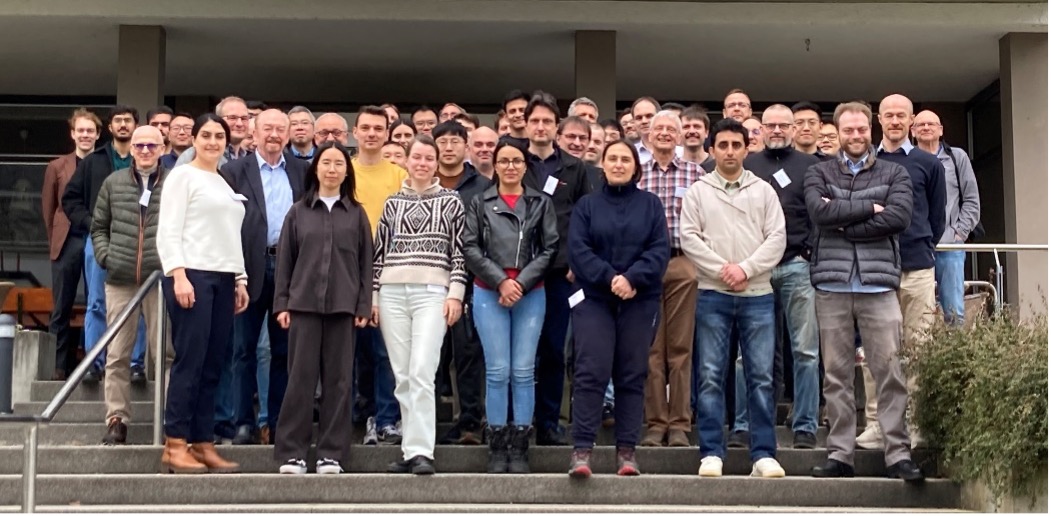
The SFB 1313 team at its annual status seminar in 2025. Credits: SFB 1313 / University of Stuttgart