

9th Brazil InterPore Chapter Meeting
General Overview
The 9th Brazil InterPore Chapter Conference on Porous Media was held from August 10 to 13, 2026, at the Brazilian Center for Research in Physics (Centro Brasileiro de Pesquisas Físicas – CBPF), in Rio de Janeiro, Brazil. Located in the Urca neighborhood, at the foot of Sugarloaf Mountain, CBPF provided an excellent setting for the conference, combining its scientific infrastructure with a privileged location in one of Rio de Janeiro's most iconic areas.
The event marked the ninth edition of a series of meetings organized by the Brazil Chapter of the International Society for Porous Media (InterPore). The first edition was held at the Brazilian National Institute of Pure and Applied Mathematics (IMPA), also in Rio de Janeiro, in 2014. Since then, the Brazil InterPore Chapter Conference has been hosted by research institutions in different regions of the country, bringing together the Brazilian porous media community and strengthening its connections with international researchers and industry.
The conference focused on recent advances in porous media research, encompassing theoretical, computational, and experimental approaches and applications across a broad range of scientific and technological fields. The program brought together researchers, students, and industry professionals, providing a forum for scientific exchange and for fostering new collaborations between academia and industry.
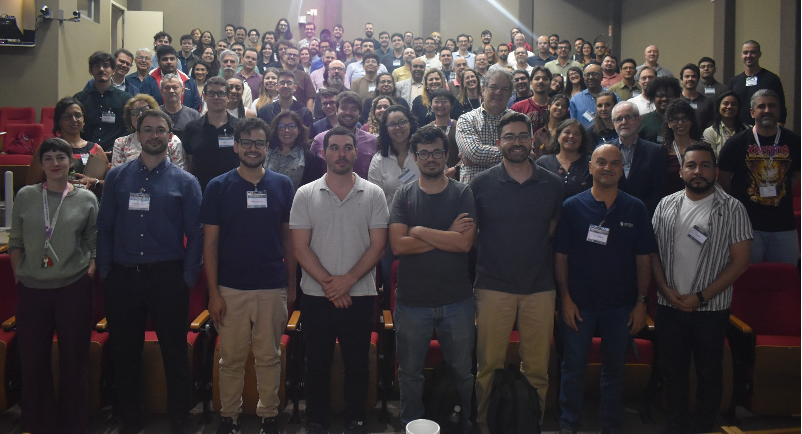
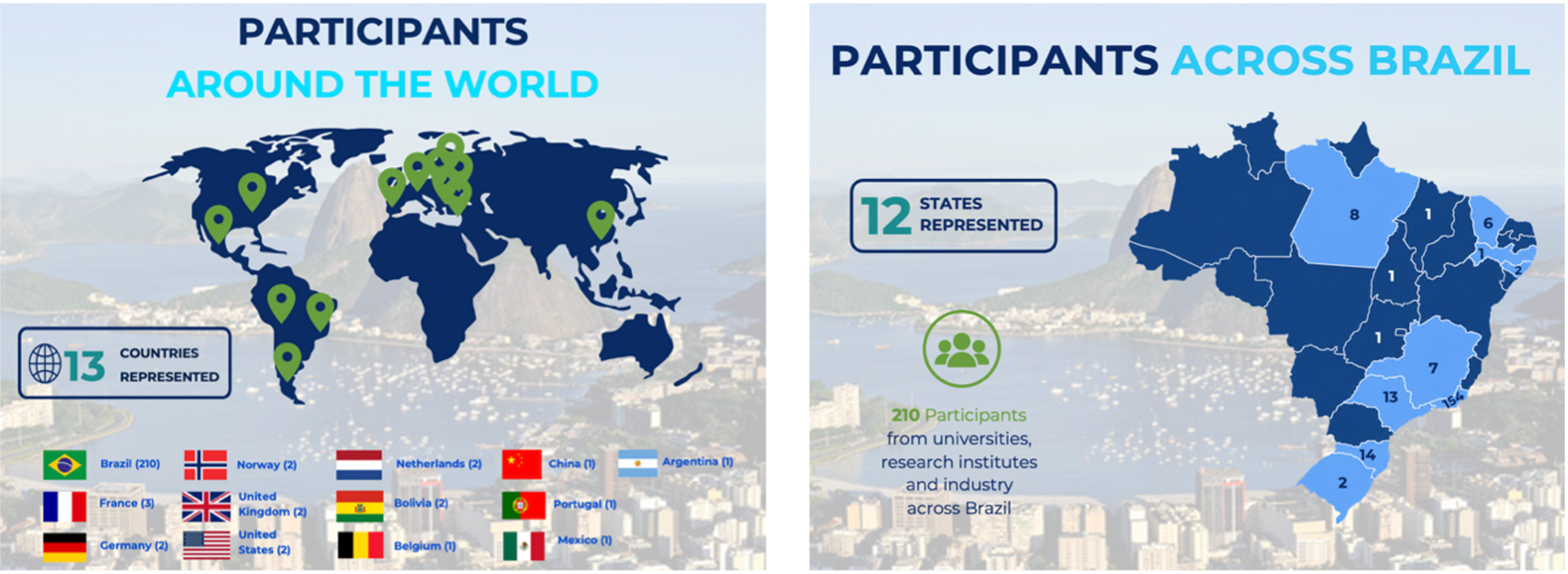
The 2026 edition attracted 249 registered participants, including 210 participants from Brazil and 39 from other countries. Participants from 13 countries were represented, while the Brazilian attendees came from 12 different states, demonstrating both the national reach and the growing international character of the meeting.
The scientific program comprised 133 presentations, including 24 invited lectures, 59 contributed oral presentations, and 50 poster presentations, making the 9th Brazil InterPore Chapter Conference one of the largest editions of the meeting to date.
Scientific Program
Program Overview
The scientific program of the 9th Brazil InterPore Chapter Conference was particularly extensive, comprising 133 scientific presentations, including 24 invited lectures, 59 contributed oral presentations, and 50 poster presentations. The program was designed to represent the broad and interdisciplinary nature of porous media research, bringing together theoretical, computational, experimental, and applied perspectives.
The presentations covered a wide range of topics related to porous media, including:
- Energy and Industrial Applications
- Oil Science and Microfluidics
- Biotechnology
- Statistical Physics of Porous Media
- Smart and Sustainable Porous Media Materials
- Carbon and Hydrogen Capture and Storage
- Biomaterials and Biomechanics
- Rock and Soil Issues
- Magnetic Resonance of Porous Media (MRPM)
- Ceramics: Processing and Applications
- Porous Building Materials
- Mathematical and Computational Modeling
- Water Resources
- Microfluidics
- Food Powders
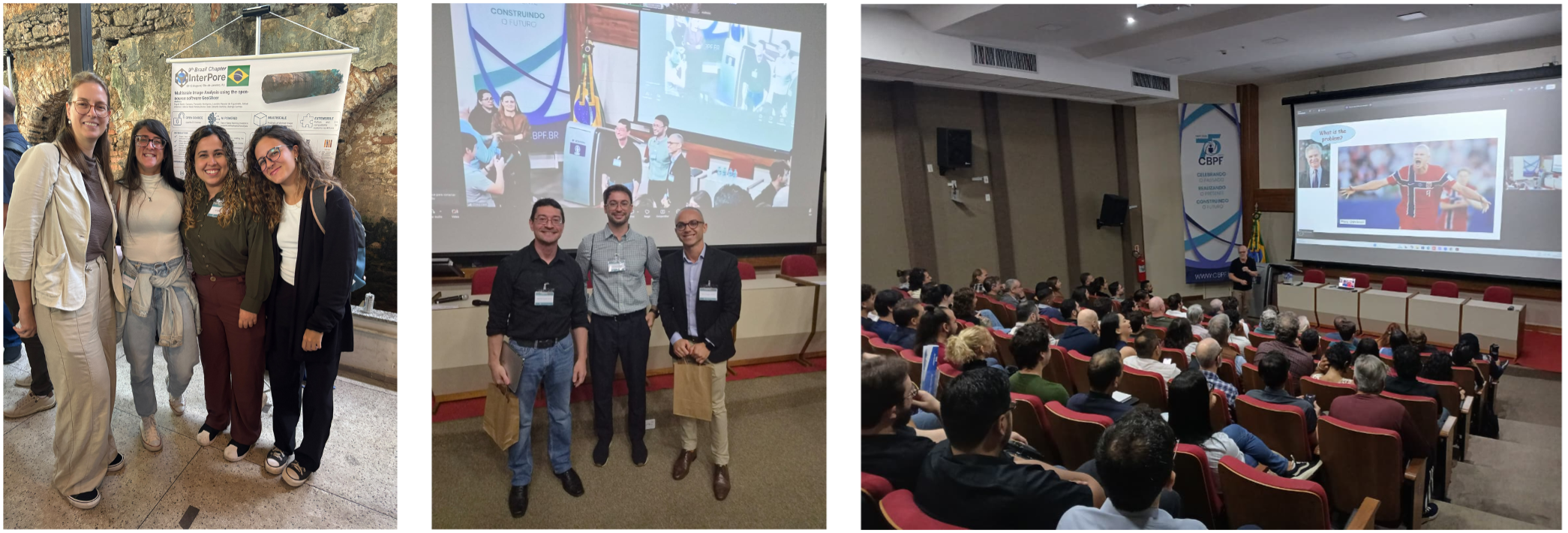
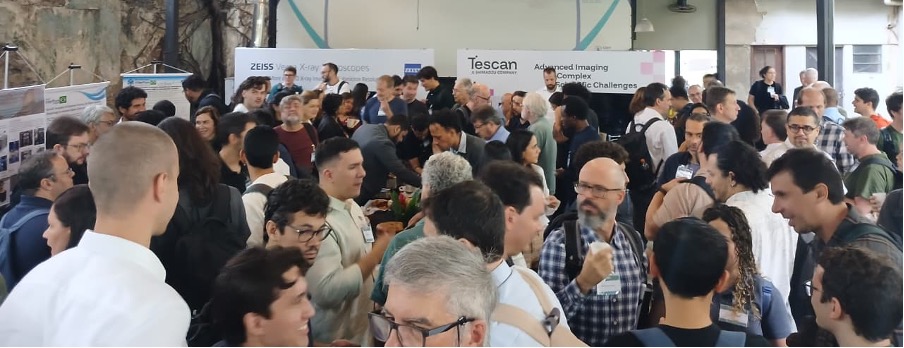
To accommodate the large number of contributions, the scientific activities were distributed among several conference spaces at CBPF. Invited lectures were primarily held in the main Ministro João Alberto Lins e Barros Auditorium, while contributed oral presentations were organized in parallel sessions using additional auditoriums on the third and sixth floors. Poster presentations were also an integral part of the scientific program, with dedicated poster sessions held in the social area during the conference. These sessions provided an informal setting for participants, particularly students and early-career researchers, to present their work and engage in scientific discussions with other attendees.
A strong interaction between academia and industry was another important component of the program. Representatives from sponsoring companies participated in scientific activities, including dedicated Industry/Academia presentations, providing a forum for discussing research, instrumentation, technological developments, and applications of porous media science.
The program also featured a round-table discussion with researchers from Shell, Equinor, and Petrobras, focused on the challenges faced by the energy industry in the context of the ongoing energy transition. The discussion brought together perspectives from major companies in the oil and energy sector and addressed scientific and technological challenges associated with adapting their activities to a changing energy landscape. The session provided an opportunity for direct interaction between industry researchers and the academic community and highlighted the important role of porous media research in addressing current and future energy challenges.
The full conference program can also be found on the website https://eventos.cbpf.br/9thinterporebr/inicio
Special Ceremony
A special highlight of the conference was a homage to Professor Dan Marchesin, recognizing his distinguished scientific career and his major contributions to the mathematical study of fluid flow in porous media.
Professor Marchesin is a distinguished researcher at the Brazilian National Institute of Pure and Applied Mathematics (IMPA). Originally trained in mathematical physics, his research has made important contributions to the qualitative theory of conservation laws and their applications to fluid dynamics and porous media flow, with particular relevance to problems such as enhanced oil recovery and climate change mitigation.
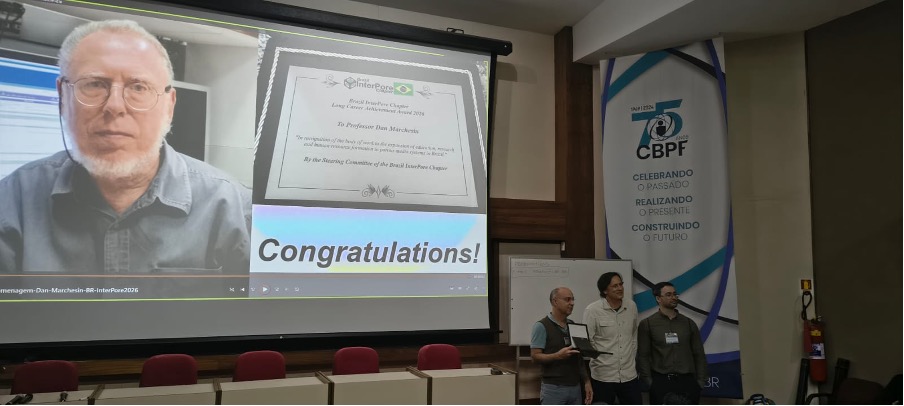
Over his career, Professor Marchesin has published more than 120 international scientific articles, supervised 22 doctoral theses, and founded the Fluid Dynamics Laboratory (FLUID) at IMPA. He is also a member of the Brazilian Academy of Sciences (ABC) and The World Academy of Sciences (TWAS).
The ceremony celebrated not only his scientific achievements but also his long-standing contribution to the development of the porous media research community in Brazil. The tribute provided an opportunity for the conference participants to recognize a career that has connected fundamental mathematics with important applications in porous media and energy-related problems.
TOP 3 Posters Award
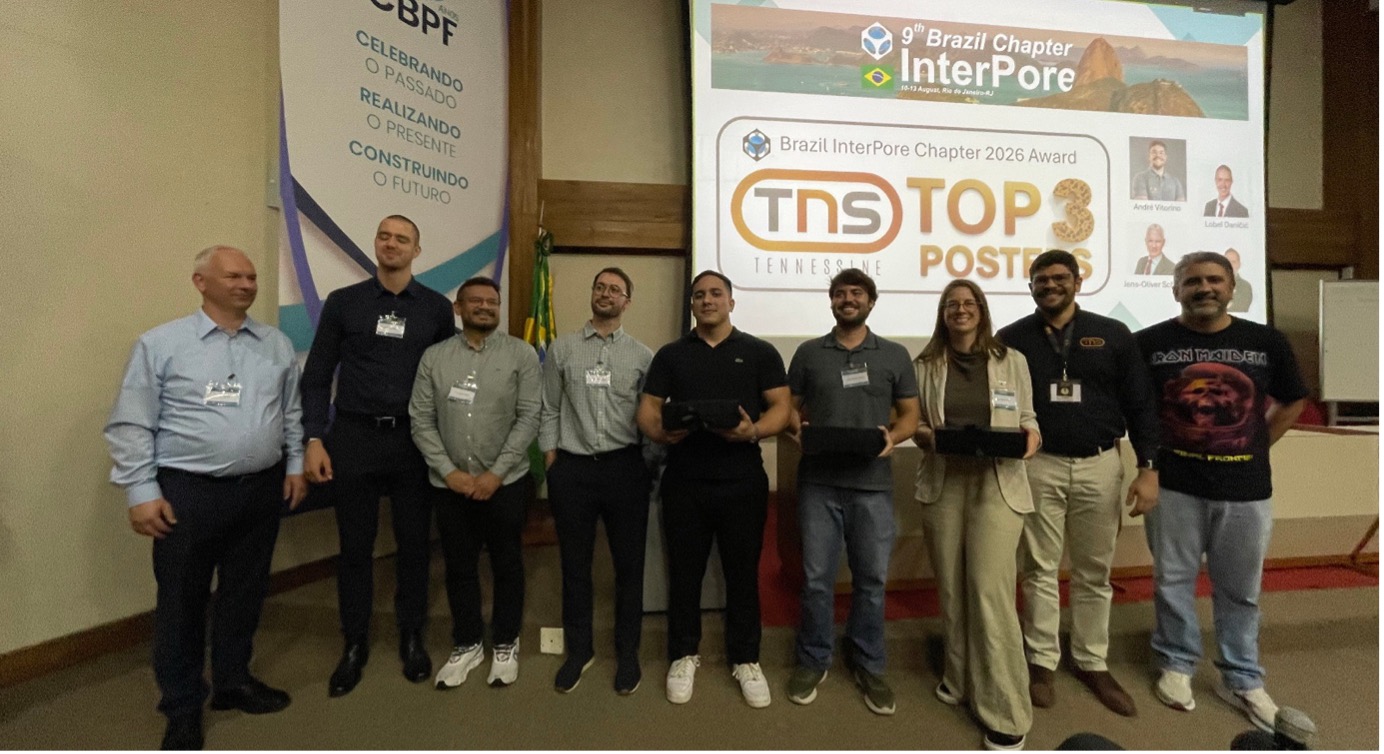
To recognize outstanding contributions, the conference presented the Brazil InterPore Chapter TOP 3 Posters Award 2026, powered by Tennessine. All poster presenters were eligible for the award, and the contributions were evaluated by an independent scientific committee based on academic rigor, clarity, and industrial relevance. Three outstanding posters were selected, with each winner receiving official conference recognition and a special prize kit provided by Tennessine, including GeoDict software license packages.
The three award recipients were Iara Frangiotti Mantovani, for “Fluid Remobilization in Carbonate Rock: Insights from Synchrotron MicroCT”; Pablo Albuquerque Godoy, for “Designing Representative Wet-Etched Rock-on-a-Chip Micromodels: From Pore-Space Properties to Single-Phase Transport”; and Yan Lucas Albuquerque Lopes, for “Elastic characterization of carbonate rocks under fluid substitution: insights from Digital Rock Physics and weak anisotropy analysis”.
Participants
The 9th Brazil InterPore Chapter Conference attracted 249 registered participants, representing a substantial and geographically diverse community of researchers, students, and industry professionals working in porous media and related fields.
Brazilian participation was particularly strong, with 210 registered participants from 12 states: Rio de Janeiro (149), São Paulo (14), Rio Grande do Sul (13), Santa Catarina (12), Minas Gerais (8), Pará (6), Paraná (2), Pernambuco (2), Ceará (1), Espírito Santo (1), Goiás (1), and Rio Grande do Norte (1). The conference brought together participants from universities, research institutes, and industry across different regions of the country, reflecting the broad reach of the Brazilian porous media community.
The conference also had significant international participation. A total of 39 registered participants from outside Brazil attended the meeting, bringing the overall representation to 13 countries. Besides Brazil, participants came from Argentina (1), Belgium (1), Bolivia (2), China (1), France (3), Germany (2), Mexico (1), the Netherlands (2), Norway (2), Portugal (1), the United Kingdom (2), and the United States (2).
The largest international delegation came from France, with three participants. Germany, Norway, the Netherlands, Bolivia, the United Kingdom, and the United States were represented by two participants each, while Argentina, Belgium, China, Mexico, and Portugal were represented by one participant each.
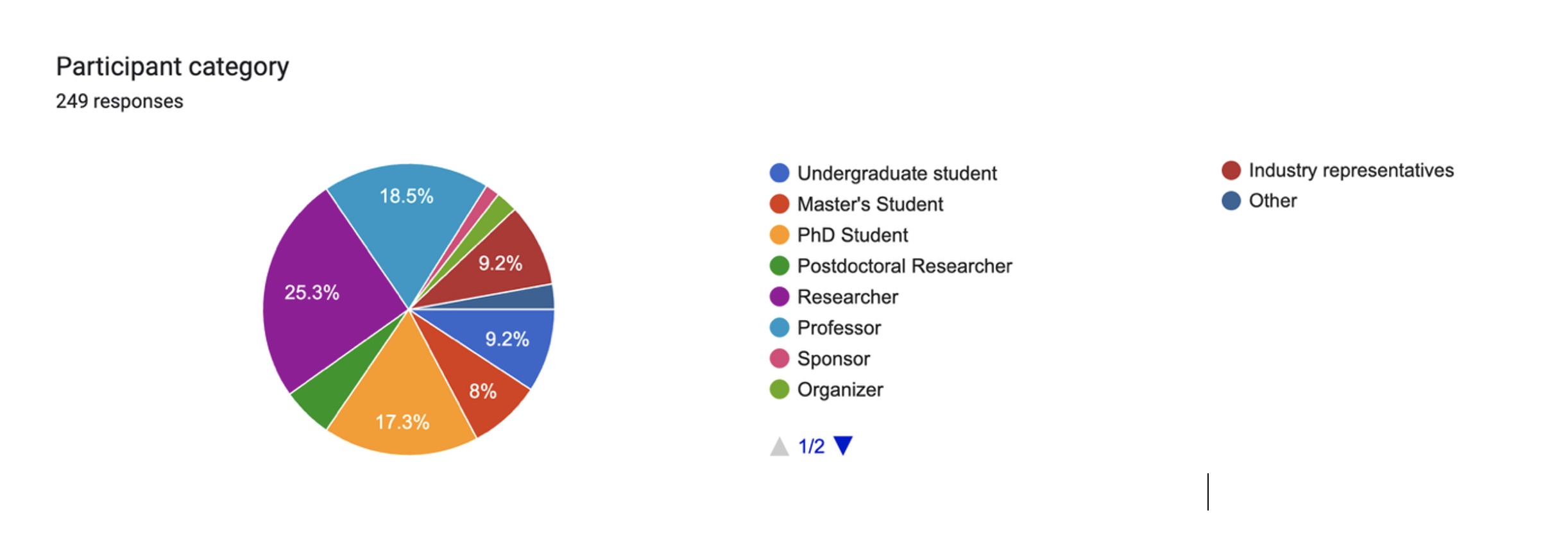
The conference attracted participants at different career stages and from both academia and industry. Among the 249 registered participants, 23 were undergraduate students, 20 Master's students, 43 PhD students, and 14 postdoctoral researchers. Together, these early-career participants accounted for 100 registrations (40.2% of the total), highlighting the strong involvement of students and young researchers in the meeting.
Senior members of the scientific community were also strongly represented, with 63 researchers and 46 professors, together accounting for 43.8% of all registrations. In addition, 23 participants (9.2%) identified themselves as industry representatives, reflecting the significant participation of industry in the conference. The remaining registrations included sponsors, organizers, and participants classified under other categories.
The broad geographic and professional diversity of the participants reinforced the role of the Brazil InterPore Chapter Conference as a meeting point for the porous media community, providing opportunities for scientific exchange and for establishing new collaborations across institutions, regions, countries, career stages, and between academia and industry.
Industry–Academia Interaction
A distinctive feature of the 9th Brazil InterPore Chapter Conference was the strong interaction between academia and industry. In addition to the participation of industry researchers in the regular scientific program, the conference included dedicated Industry/Academia presentations, a round-table discussion, and technical mini-courses offered by the industry sponsors.
The Industry/Academia sessions provided a space for researchers from companies to present scientific and technological developments related to porous media and to discuss problems of direct relevance to industrial applications. These contributions complemented the academic presentations and promoted exchanges between researchers working on fundamental problems and specialists dealing with technological and operational challenges.
An important highlight was a round-table discussion with researchers from Shell, Equinor, and Petrobras, addressing the challenges faced by the energy industry in the context of the ongoing energy transition. The discussion brought together perspectives from three major energy companies and explored how scientific research, technological development, and expertise in subsurface and porous media processes can contribute to emerging challenges associated with the transformation of the energy sector.
Industry partners also contributed directly to the educational component of the conference by offering a series of one-hour technical mini-courses. TESCAN presented Beyond 3D – Dynamic and Spectral CT in Porous Media Research, given by Michiel Krols, introducing advanced applications of high-speed dynamic micro-CT and spectral imaging to the characterization of porous materials and processes.
ZEISS offered XRM Applied to Advanced Materials Characterization: Phase Segmentation and Quantification Using ZEISS Mineralogic 3D, presented by Renato Contessotto. The course focused on X-ray microscopy and three-dimensional mineralogical analysis, including phase identification, segmentation, quantification, and non-destructive characterization of complex materials.
A third mini-course, offered by Tennessine/Math2Market, was Digital Rock Physics: Workflows with GeoDict, presented by Lobel Danicic and Jens-Oliver Schwarz. The course addressed digital rock physics workflows, including multiscale imaging, image segmentation, pore-scale simulations of single- and multiphase flow, uncertainty quantification, and comparison with laboratory measurements.
Together, these activities provided participants with opportunities not only to discuss current industrial challenges but also to gain direct exposure to advanced experimental, computational, and imaging tools. The integration of industry researchers and partners into the scientific and educational program strengthened the connection between fundamental porous media research and its technological applications.
Social Events
To complement the scientific program, social activities were organized to encourage informal interaction among participants and to provide visitors with an opportunity to experience the surroundings and atmosphere of Rio de Janeiro. Taking advantage of the privileged location of CBPF in Urca, the activities were held within walking distance of the conference venue.
Sugarloaf Mountain
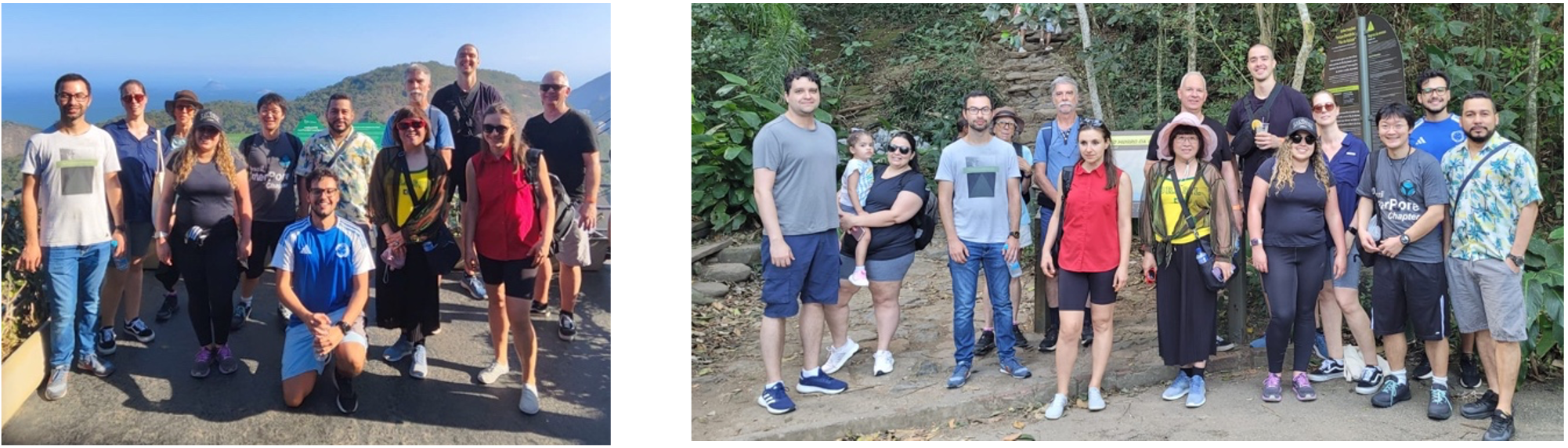
A pre-conference social activity was organized at Sugarloaf Mountain (Pão de Açúcar), one of Rio de Janeiro's most iconic landmarks and located only a short distance from CBPF. The activity provided an opportunity for participants to meet before the beginning of the scientific program while enjoying panoramic views of Rio de Janeiro and Guanabara Bay.
The informal setting offered an excellent opportunity for participants arriving from different parts of Brazil and abroad to become acquainted and interact before the start of the conference.
Mureta da Urca
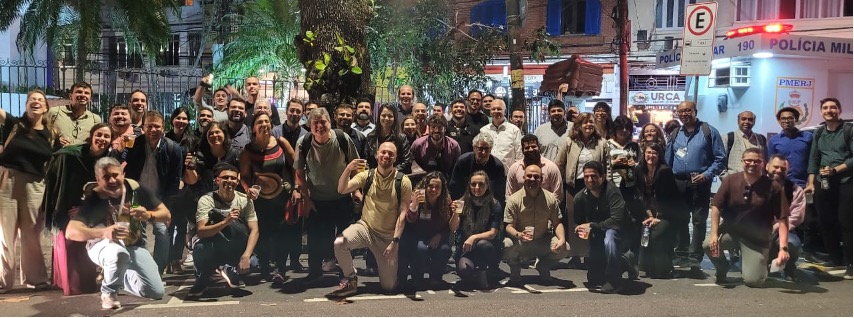
A second social gathering took place at Mureta da Urca, a traditional meeting point along Guanabara Bay and close to the conference venue. The gathering provided a relaxed environment for participants to socialize outside the formal scientific sessions and continue conversations initiated during the conference.
The choice of Urca for this activity allowed participants to experience the neighborhood hosting the conference and contributed to the informal and welcoming atmosphere of the meeting.
Sponsorship
The 9th Brazil InterPore Chapter Conference received important support from both industry sponsors and Brazilian research funding agencies. This support was essential for the organization of the meeting and contributed to bringing together a broad community of researchers, students, and industry professionals.
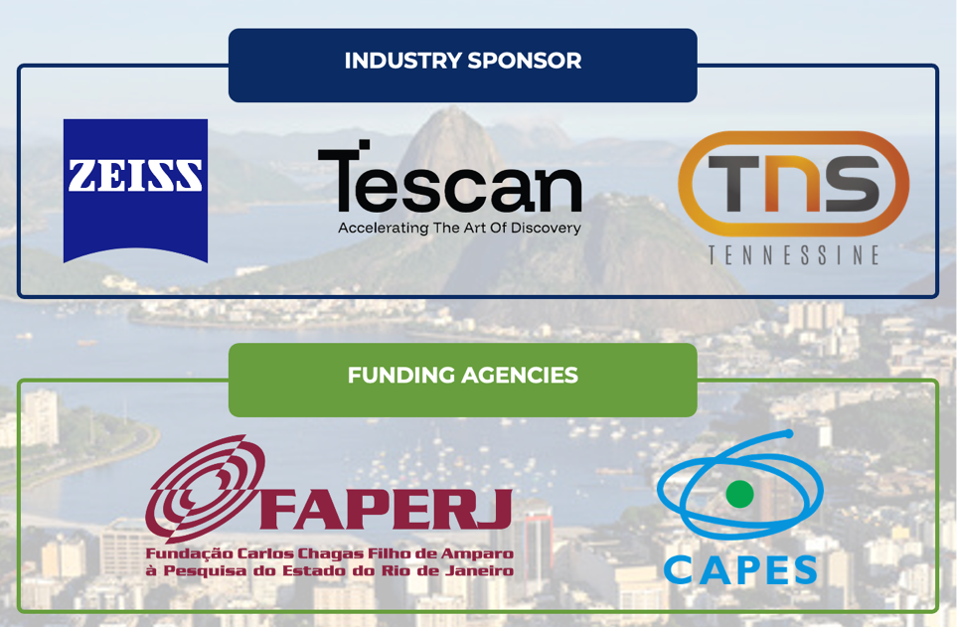
The conference was sponsored by TESCAN, ZEISS, and Tennessine Instrumentação Analítica, companies involved in scientific instrumentation, microscopy, materials characterization, and analytical technologies relevant to porous media research. In addition to their financial support, the industry sponsors contributed to the interaction between academia and industry throughout the conference.
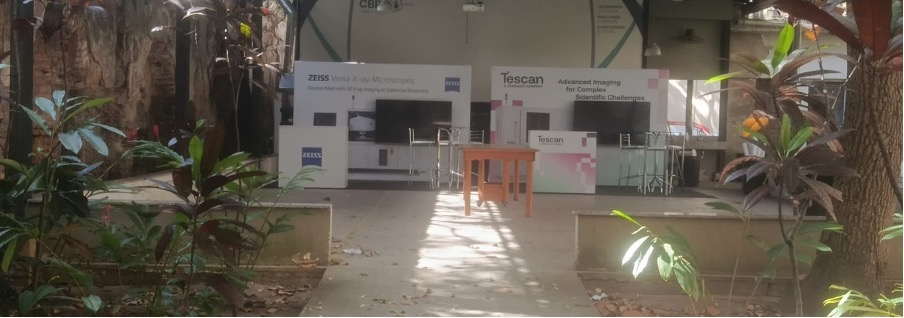
Sponsor exhibition booths were located in the social area, alongside the poster sessions and coffee breaks, allowing direct interaction between company representatives and conference participants. Industry representatives also contributed to the scientific program through dedicated Industry/Academia presentations, in which scientific and technological developments relevant to porous media research and applications were presented and discussed.
The conference also received financial support from two major Brazilian research funding agencies: FAPERJ (Fundação Carlos Chagas Filho de Amparo à Pesquisa do Estado do Rio de Janeiro) and CAPES (Coordenação de Aperfeiçoamento de Pessoal de Nível Superior). Their support, together with the contributions from the industry sponsors, played an important role in enabling the scientific program and the overall organization of the event.
Looking Ahead: InterPore 2027 in Rio de Janeiro
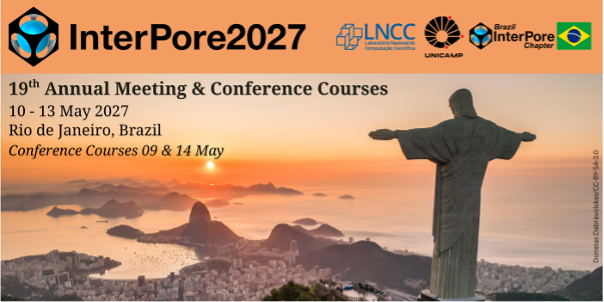
The 9th Brazil InterPore Chapter Conference also provided an opportunity to look ahead to an important milestone for the Brazilian porous media community: Rio de Janeiro will host the 19th InterPore Annual Meeting & Conference in 2027.
Bringing the international InterPore Annual Meeting to Brazil represents an important achievement for the national community and reflects its growing participation in the international porous media network. The 2027 meeting will provide an opportunity to welcome researchers from around the world and further strengthen connections between the Brazilian community, international research groups, and industry.
The successful organization of the 9th Brazil InterPore Chapter Conference in Rio de Janeiro therefore also served as an important step toward the next major gathering of the InterPore community in the city.
We look forward to welcoming the international porous media community back to Rio de Janeiro for InterPore 2027!
Scientific Committee
The scientific program of the 9th Brazil InterPore Chapter Conference was supported by a scientific committee composed of researchers from Brazilian and international institutions.
National
- Celso Peres Fernandes — UFSC, Brazil
- Eduardo Abreu — UNICAMP, Brazil
- Grigori Chapiro — UFJF, Brazil
- Ivan Oliveira — CBPF, Brazil
- Marcio Murad — LNCC, Brazil
- Marcio Carvalho — PUC-Rio, Brazil
- Nathaly Lopes Archilha — LNLS/CNPEM, Brazil
- Pedro Aum — UFPA, Brazil
International
- Amir Raoof — Department of Earth Sciences, Utrecht University, Netherlands
- Kamaljit Singh — Heriot-Watt University, United Kingdom
- Linda Luquot — CNRS, Géosciences Montpellier, France
- Tannaz Pak — Energy and Environmental Engineering, Teesside University, United Kingdom
- Macel Moura — University of Oslo, Norway
Organizing Committee
The 9th Brazil InterPore Chapter Conference was organized by a committee comprising researchers and staff from CBPF and collaborating institutions:
- Rodrigo Coelho — CBPF
- Marcelo Pires — CBPF
- Ivan Oliveira Junior — CBPF
- Clécio de Bom — CBPF
- Anderson Camargo — UFSC
- Elvis Soares — PEQ/UFRJ
- Alan Maioli — CBPF
- Bernardo Coutinho — CENPES
- Moacyr Nascimento — CBPF
- Matheus Martins — CBPF
- Henrique Lima — CBPF
- Gustavo Ribeiro — CBPF
- Arthur Santana — UFMG
- Brendon Pontes — UFF
- Sônia Ferreira — CBPF
- Anna Chataignier — CBPF
Acknowledgements
The Organizing Committee would like to thank all participants, invited speakers, session chairs, poster and oral presenters, and members of the Scientific Committee for their contributions to the success of the 9th Brazil InterPore Chapter Conference.
We gratefully acknowledge the financial support provided by FAPERJ and CAPES, as well as the support and active participation of our industry sponsors, TESCAN, ZEISS, and Tennessine Instrumentação Analítica.
The organizers also thank CBPF for hosting the conference and for providing the facilities and institutional support required for the event. Special thanks are extended to the CBPF staff, students, volunteers, and collaborators who assisted with the organization and logistics throughout the conference.
Finally, we thank the entire porous media community for the enthusiastic participation, scientific discussions, and collaborative atmosphere that made the 9th Brazil InterPore Chapter Conference possible.