InterPore News featuring courses, webinars and lunch

Sent on: 11-04-2026

Dear InterPore colleagues,

I visited an interesting symposium today about One Health. Throughout the day, several presenters explained that we need more and structural funding. That is, of course, true.

I do think that these ideas have been around for at least a couple of decades. Do we actually make progress at all? Well, science does, which was also apparent during the symposium, but why not the overarching questions on funding or policy? I guess it looks like reinventing wheels, but with every new generation of researchers, employees in funding agencies and policy makers… it is reinventing a wheel again, but not the same one. New dynamics, new driving forces, and new scientific insights call for new approaches. We just need to figure out what works best… again!

All the best,

Matthijs de Winter
Editor-in-Chief
InterPore News


Tuesday, 19 May, 12:40–13:40, at InterPore2026

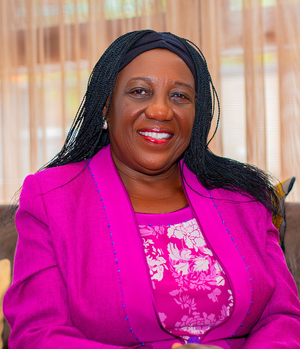
The InterPore DEI Lunch Forum will feature Dr. Naomi Lumutenga, Executive Director and Co-founder of Higher Education Resource Services–East Africa (HERS-EA). In her talk, “Why Gender Inclusion is Africa’s Next Big Growth Opportunity: Higher Education in Focus,” she will highlight how advancing women’s leadership in higher education drives research impact, institutional change, and community development. Drawing on over a decade of work across East Africa, Dr. Lumutenga will share lessons on moving from gender equity policy to practice—offering insights relevant far beyond academia.


There is still time to register for one of our 2026 Conference Courses, taking place in person on Monday, 18 May, ahead of the main conference.

Join S. Majid Hassanizadeh (Center for Simulation Science (SimTech), University of Stuttgart; Emeritus Professor of Hydrogeology, Utrecht University) for “Advancing Your Research Career: Sharing 50 Years of Experience on Best Practices in Experimental Studies, Modeling, Writing, and Professional Development” which offers a comprehensive framework and holistic set of skills to support participants in becoming effective, credible, and visible contributors to the scientific community.

Or explore the fundamentals of pore network modelling with GeoSlicer and learn the workflow for reading processing micro-tomography data from porous rock samples with Rafel Guntzel Arenhart (LTrace Geosciences) in his course “Multiscale Pore Network Simulation with Geoslicer.

View the full list of available course here.

If you have already completed your conference registration and would like to add a conference course, please contact margaret.dieter@interpore.org.


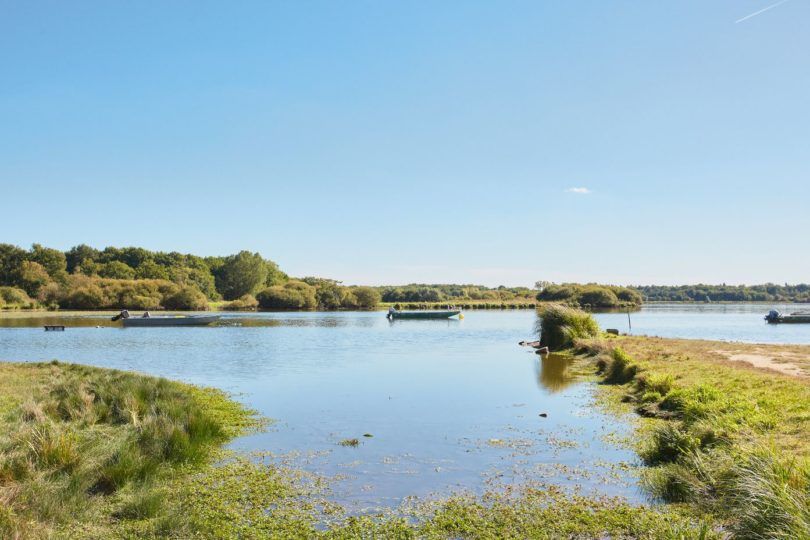
The Lac de Grand-Lieu is a lake located 15 km southwest of Nantes. With a surface area of 63 km² at an elevation of 5 m, it is the largest lake in France in winter, but the second largest after Lac du Bourget in summer. The lake's flora and fauna, including birds, reptiles and amphibians, are particularly notable, which is why most of the area has been designated as a national nature reserve.

Photo credit: Vincent Bauza


Thermo Fisher Scientific is proud to sponsor InterPore 2026 and support the global porous media community. At our booth, we will showcase an integrated portfolio of high-resolution imaging and advanced analysis solutions designed to accelerate insight across scales. Our microscopes enable…

COMSOL is a global provider of simulation software for product design and research to technical enterprises, research labs, and universities. Its COMSOL Multiphysics® product is an integrated software environment for creating physics-based models and simulation apps. A particular strength is…


Our Sponsors


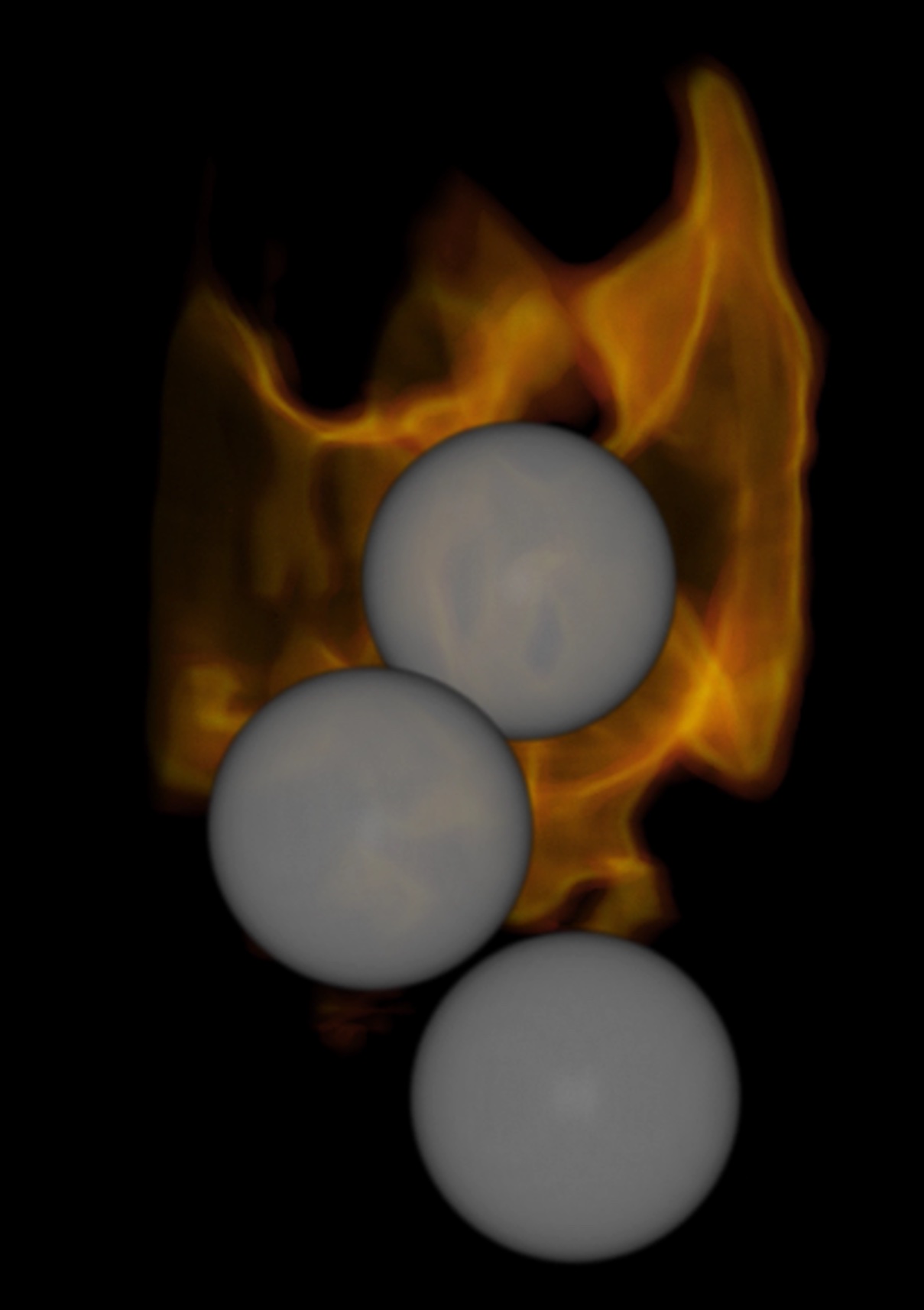
How Inert Phases and Active Matter Shape Mixing and Reactions in Porous Media 

Join us on Tuesday, 21 April at 16:00 CEST for an exciting talk on how inert phases and active matter shape mixing and reactions in porous media.

Professor Jimenez-Martinez is leading the Subsurface Environmental Processes group at Eawag (Swiss Federal Institute of Aquatic Science and Technology) and at the Department of Civil, Environmental, and Geomatic Engineering at ETH Zurich.

Image credit: Markale et al.


The International Science Council, co-leading the UN Scientific and Technological Community Major Group together with the World Federation of Engineering Organizations, invites contributions to the 2026 position paper.

This paper, along with selected case studies, will directly inform the High-Level Political Forum on Sustainable Development—a key platform for bringing scientific evidence into UN discussions on Agenda 2030 and the Sustainable Development Goals.

This year’s focus is on implementation in practice. Rather than identifying what needs to change, the call seeks concrete, real-world examples of how science and engineering are already driving progress. This may include contributions that:

  • Inform policy and investment decisions
  • Support the uptake of solutions
  • Enable partnerships
  • Address practical challenges in implementation

Submissions are particularly encouraged from across the ISC membership and should reflect the diversity of disciplines, contexts, and approaches within the global scientific community.

Selected case studies will be featured in the 2026 position paper and fully acknowledged.

Deadline: 19 April 2026


5th International Conference on Coupled Processes in Fractured Geological Media: Observation, Modeling, and Application

20-23 September 2026, Uppsala, Sweden

CouFrac2026 (as an ISRM specialized conference) will provide a dynamic platform for researchers, engineers, and practitioners to share recent advances, exchange ideas, and foster collaborations in all areas of coupled processes associated with fractured geological media.

17-20 August 2026, Mexico City, Mexico

The Society of Core Analysts (SCA) is a chapter-at-large of the Society of Petrophysicists and Well Log Analysts (SPWLA). The SCA symposium is a four-day conference and exhibition with 2026 being its 39th year. The annual symposium has built a reputation over the last 30+ years for its high-quality technical presentations in Core Analysis, as well as for giving the main players in the industry the opportunity to showcase their latest technical innovations and offerings in equipment and services.


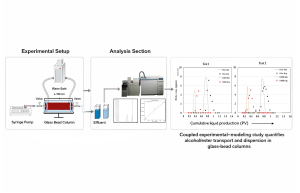
Mostafa Ramezani, Rohaldin Miri

Presenting a newly designed laboratory flooding system for Single Well Chemical Tracer Testing (SWCTT), the setup integrates precision-controlled injection, thermal regulation, and a glass-bead packed column combined with advanced gas chromatography analysis. Laboratory experiments were successfully coupled with UTCHEM simulations to determine key transport parameters—including dispersion coefficients and reaction kinetics—under varying salinity conditions. This combined experimental-modeling approach provides a solid basis for scaling tracer testing methods to pilot and field-scale reservoir characterization.

InterPore Journal Vol. 3, Issue 1, 2026


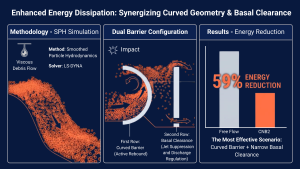
Anahita Aghagoli, Hamed Sadeghi

Viscous debris flows pose significant mitigation challenges, often requiring solutions beyond rigid barriers. Smoothed Particle Hydrodynamics (SPH) is used to evaluate the effectiveness of combining upstream curved barriers with downstream basal clearance. The results show that a curved primary barrier paired with a narrow basal clearance in a second row can reduce maximum kinetic energy by 59% and momentum by 54% compared to free-flow conditions. These and additional findings highlight geometric optimization as a space- and cost-efficient strategy for debris flow mitigation.


Job Offers

PositionLink
PhD position, Tomographic analysis of flow fields in pore networks affected by clogging, Helmholtz-Zentrum Dresden-Rossendorf, Leipzig, Germany Show Job Offer

There is always something going on at InterPore! We have courses, workshops, and webinars through the InterPore Academy, Chapter Meetings across the globe, and the Annual Meeting in a new and different location every year. Check out the offerings through the button below.