InterPore News featuring InterPore2026 early-bird registration now open

Sent on: 02-03-2026

Dear InterPore colleagues,

The InterPore2026 abstract notifications have been sent. Check your mailbox if you submitted an abstract. Also, the early-bird registration has opened. It might save (quite) a few bucks by organizing your stay and entrance well in time!

Meanwhile, we announce two more InterPore award winners, joyful news from Stuttgart, the KC lecturer kick-off and two interesting papers to study.

All the best,

Matthijs de Winter
Editor-in-Chief
InterPore News


While the organizers are busy reviewing the nearly 1,000 abstracts submitted so far, submissions for poster and online presentations are still open. There’s still time to share your work and join the InterPore2026 program!


Registration for InterPore2026 is now officially open and early-bird rates are available until 20 March!

We encourage early registration to secure your place and take advantage of the discounted rates. We look forward to welcoming you—whether onsite or online—for an engaging and inspiring InterPore2026.


Notifications regarding abstract submissions for InterPore2026 have now been sent to all corresponding authors. If you have not received an email, please check the status of your contribution directly via the My Conference page on the conference platform.

We look forward to welcoming you to an exciting and diverse scientific program in Nantes!


We are pleased to welcome Bruker as a Silver Sponsor of InterPore2026! A global leader in scientific instrumentation and analytical solutions, Bruker supports cutting-edge research across materials science, geoscience, and porous media applications. We thank Bruker for their continued commitment to advancing innovation and supporting the InterPore community.


Our Sponsors


InterPore Elections will take place from 1–30 November 2026.

As a reminder, your InterPore membership must be valid for the duration of the election in order to be eligible to vote. In the meantime, members are encouraged to visit their My InterPore page to ensure that their membership is valid through November 30 2026. For any questions regarding membership, please contact us at membership@interpore.org.


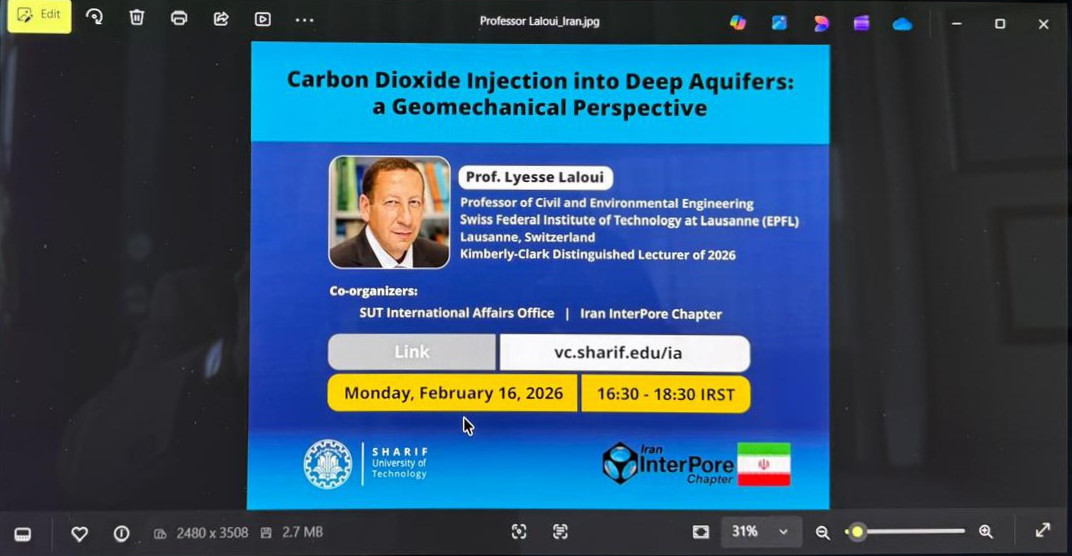
Prof. Lyesse Laloui, from the Swiss Federal Institute of Technology at Lausanne (EPFL), Lausanne, Switzerland, is the Kimberly-Clark Distinguished Lecturer of 2026.

His first presentation, "Carbon Dioxide Injection into Deep Aquifers: a Geomechanical Perspective" took place online at the Sharif University of Technology, Iran, on 16 February 2026. Around 80 participants were present, and after the lecture there was long Q&A session.

His next lecture will take place at the end of March at the Lebanese American University, Lebanon (online).


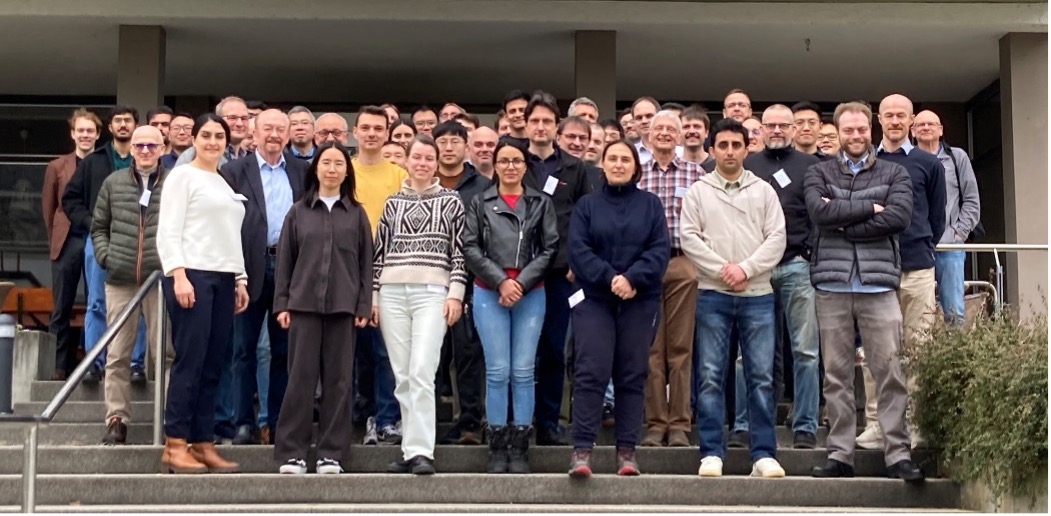
The Collaborative Research Centre (SFB) 1313 “Interface-Driven Multi-Field Processes in Porous Media – Flow, Transport and Deformation” of the University of Stuttgart goes into the third funding period (2026 – 2029).

If you want to know more about their work and their team, please visit the Research Spotlight.

Photo: The SFB 1313 team at its annual status seminar in 2025 / University of Stuttgart


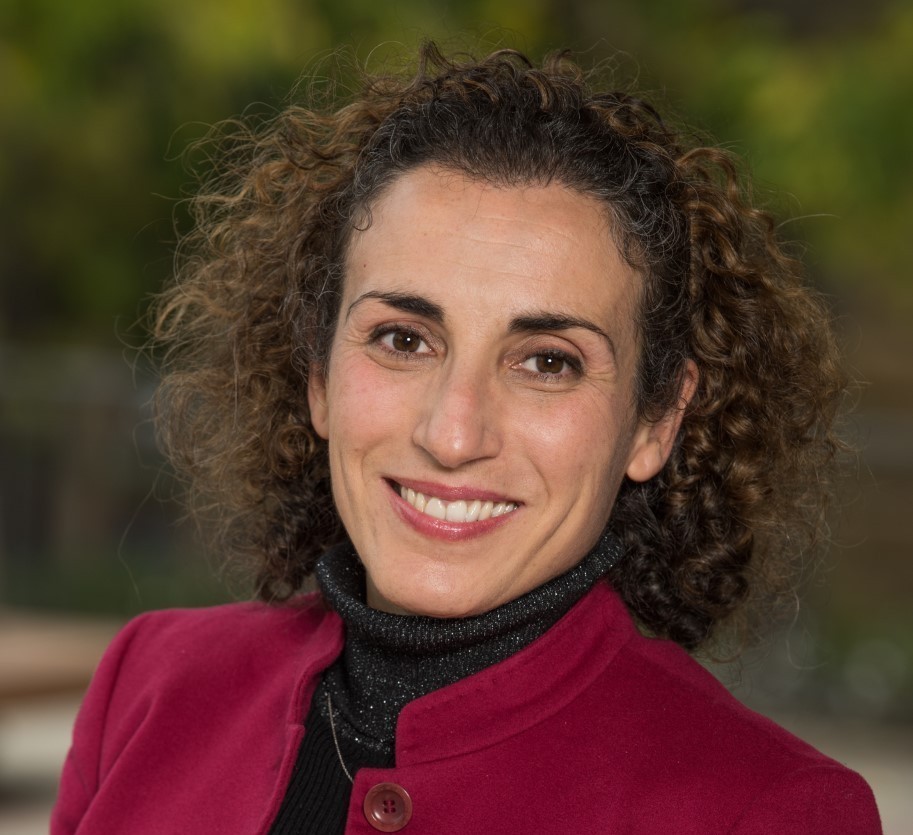
Dr. Ilenia Battiato from Stanford University, USA, has won the InterPore Award for Porous Media Research. Read the full announcement and more about Dr. Battiato’s work in the link below. InterPore and InterPore Foundation congratulate Dr. Battiato on this honor and wish her continued success.


Prof. Ruben Juanes, of the Massachusetts Institute of Technology, USA, has won the InterPore Medal for Porous Media Research. Read the full announcement and more about Prof. Juanes' work in the link below. InterPore and InterPore Foundation congratulate Prof. Juanes on this honor and wish him continued success.


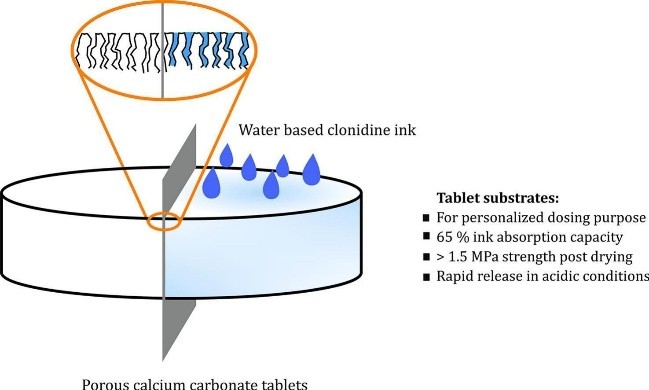
T. Lashkari, W.E. Hennink, S.M. Hassanizadeh, J.H.J. Quodbach, R.J. Kok

The need for customizable drug delivery systems has become increasingly important. In this study, Lashkari et al. developed porous tablets as substrates for drop-on dispensing of drug-containing ink in personalized doses. They evaluated this approach by making porous tablets made of functionalized calcium carbonate (FCC) and with clonidine hydrochloride, a hydrophilic drug prescribed in low doses for pediatric patients with hypertension.


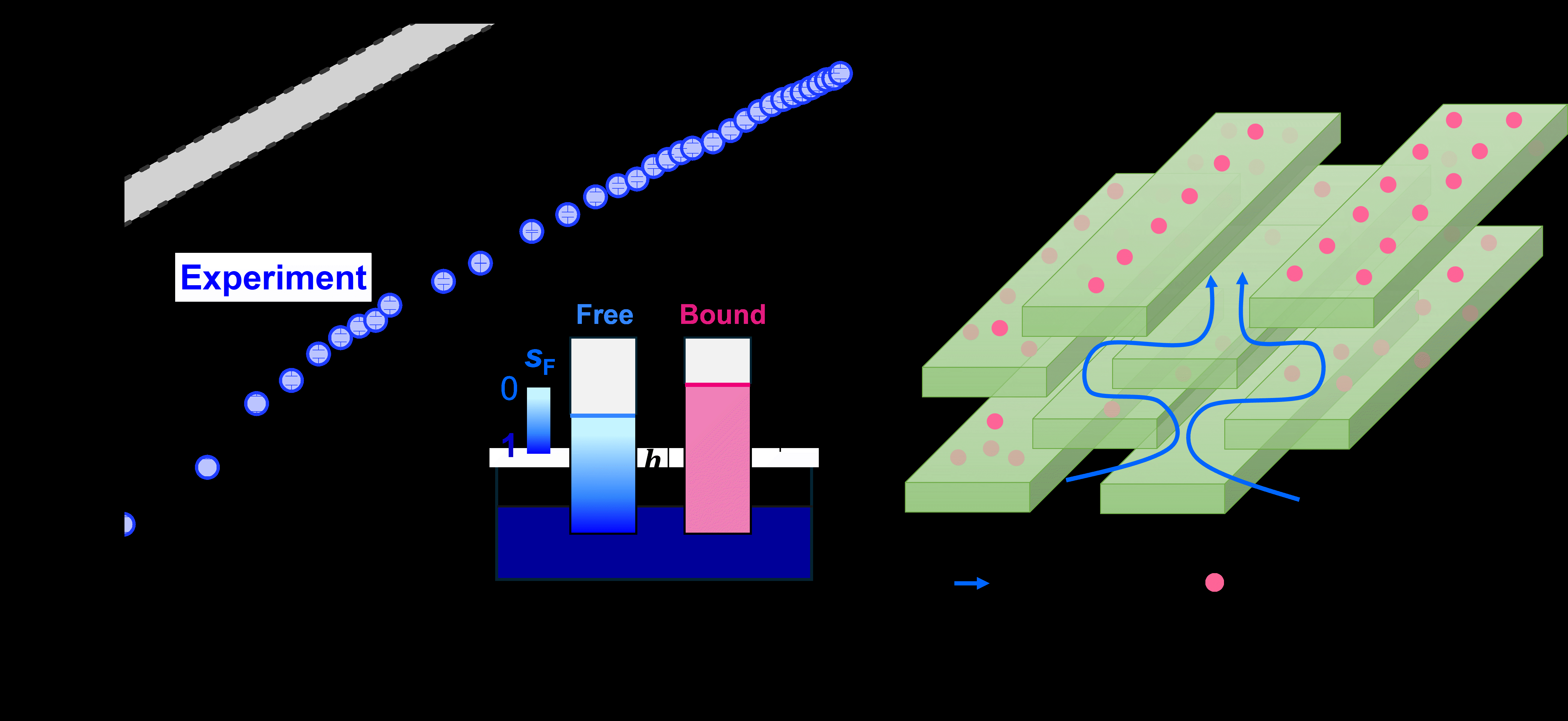
Kang Hu, Benjamin Maillet, Jaime Gil-Roca, Luoyi Yan, Yuliang Zou, Laurent Brochard, Philippe Coussot

The classical Lucas–Washburn (LW) model has long been used to describe liquid seepage in various porous media. However, for hygroscopic cellulose-based materials, a fraction of water can be absorbed in the form of (nanoconfined) bound water into the amorphous regions of cellulose microfibrils thus inducing cellulose swelling. Experiments show the actual imbibition is one to two orders of magnitude slower than LW predictions. MRI results show that the free water saturates the porosity behind the front but the bound water progressively saturates the cellulose fibers ahead of the free water front. These results finally challenge the direct applicability of standard concepts to interfacial phenomena in hygroscopic porous materials.


Job Offers

PositionLink
PhD Position in Multi-Scale Reactive Transport Modeling in Deep Hydrothermal Reservoirs Show Job Offer
2 PhD positions on upscaling transport processes in partially-saturated porous media, IDAEA-CSIC, Barcelona, Spain Show Job Offer

There is always something going on at InterPore! We have courses, workshops, and webinars through the InterPore Academy, Chapter Meetings across the globe, and the Annual Meeting in a new and different location every year. Check out the offerings through the button below.